Water heaters · tank and tankless
Water Heater Repair, Installation, & Replacement in Yakima
Tank or tankless, Rheem, Navien or Rinnai: Joe Ross and his crew repair what is worth repairing and tell you plainly when a replacement is the better spend.
Chapter 01
When the hot water stops being reliable in Yakima
A failing water heater takes the whole house with it. The shower runs cold halfway through, the dishwasher cannot get a proper rinse and the laundry room goes quiet, all because one tank in the basement or closet stopped keeping up.
Most customers notice it first as hot water that swings, a rumble when the burner or elements kick in, or a damp patch at the base of the tank. Rusty or cloudy water from the hot tap is the other early flag. If the heater is past 8 to 12 years old, any one of those is a good reason to call before it turns into a flooded floor.
Joe's crew works on both tank and tankless units, including the Rheem, Navien and Rinnai models they see most often around the valley, and the same crew that diagnoses it is the one that does the work.
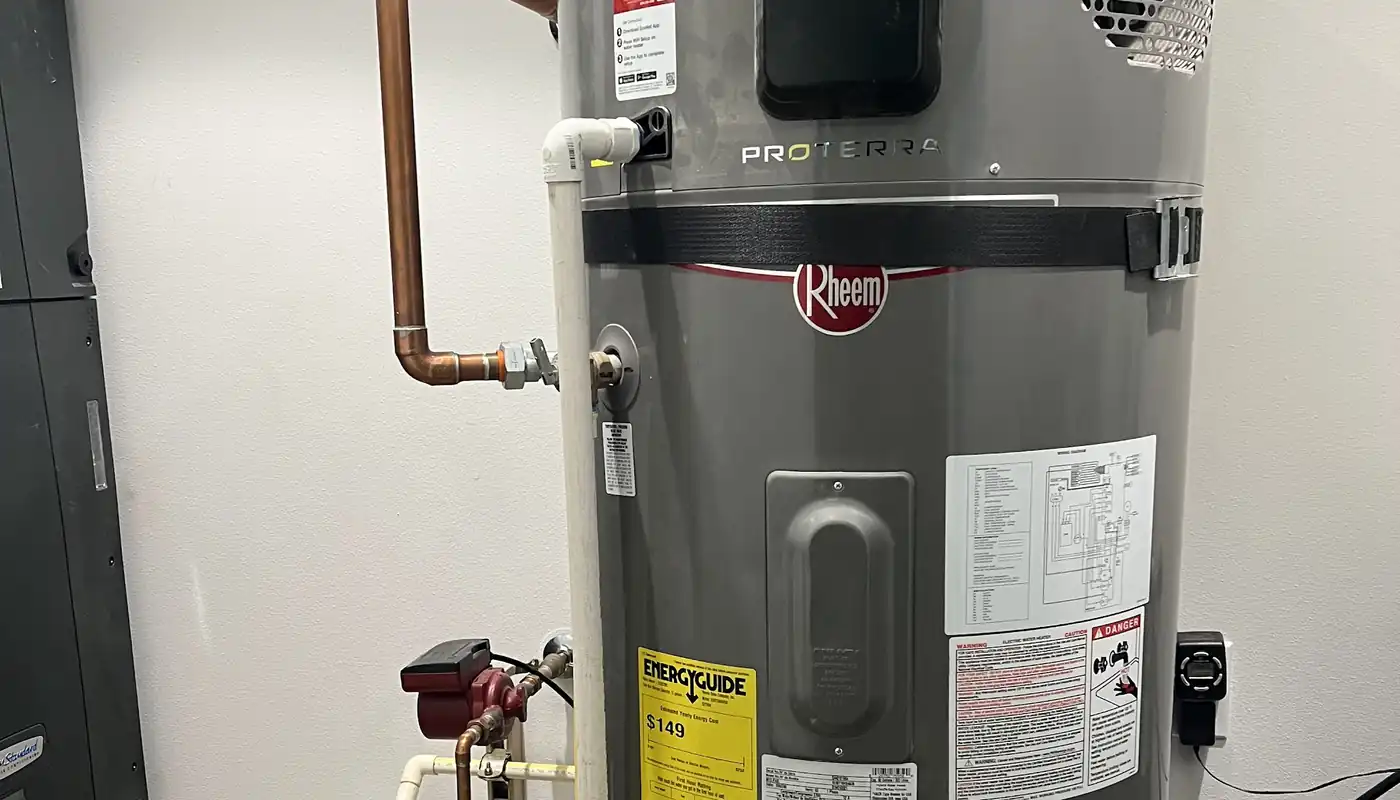
A Rheem heat-pump water heater installed by the All Valley Plumbing crew
Repair it, or swap it: how the call gets made
We start with the unit in front of us. Age, where the water is coming from, the condition of the tank, the shutoff valves and the temperature and pressure relief valve all go into the answer. A bad element or thermostat on a younger tank is worth fixing. A tank that is leaking from the shell is not.
When it is a replacement, the old tank is drained and removed, the new one is set and connected with new flex connectors, and the gas line or the electrical supply is checked before anything is switched on. If your setup calls for an expansion tank, that goes in too. Estimates are free, the price is explained before work begins, and the price you get never changes after the fact.
If you are weighing tankless, it heats water on demand instead of keeping a reservoir hot all day, which can mean lower energy use than a standard tank. We will walk you through the options for your house and your budget, and financing through Housecall Pro and Wisetack is available for the bigger installs.
Chapter 03
Keeping the next one alive longer
Flush the tank at least once a year. Sediment builds up on the bottom, makes the unit work harder and costs you efficiency, and it is worst in homes with hard water. If yours is hard, a water softener beside the heater protects it, which is why we often quote the two together. See our water treatment page for how that works.
Have the anode rod checked and replaced when it is spent. It is the part that corrodes instead of your tank, and it is one of the cheapest ways to add years. And keep the thermostat at 120 degrees Fahrenheit, which is plenty for most households and keeps the unit from overheating.
We serve Yakima, Selah, Union Gap, Terrace Heights and Wapato, plus Ellensburg and the rest of Kittitas County and Yakima County. Office hours are Monday to Friday, 7am to 5pm. If a heater starts leaking outside those hours, shut the water off at the unit and call first thing.
“Discovered the holding tank had a leak, called All Valley and they were at my house within an hour, estimate was very quick! By 2:30 the same day, had a new tank and water running...” Teresa Spurlock · Google review
Read the tank
Signs it’s time
Five things worth acting on. Two or more together usually means plan the replacement now. Leaks and rusty water also tie into leak detection if the source is not obvious.
Inconsistent hot water
Water that swings between hot and cold usually means something is failing inside the unit, not in your faucet.
Strange noises
Rumbling, banging or popping is sediment cooking on the bottom of the tank, or a heating element on its way out.
Visible leaks
Water pooling around the base means the tank itself has given up. A tank that leaks cannot be patched.
Rusty or cloudy water
Discoloured water points to corrosion inside the tank, which tends to end in a leak or a full failure.
Age of the unit
Most water heaters last 8 to 12 years. Near or past that range, replacing it on your schedule beats replacing it at 5:30 on a cold morning.