Sewer lines · replacement
Sewer Line Replacement in Yakima
Repair is always the first choice. When the line is past repairing, we replace it by open trench or trenchless methods and plan around Yakima's soil, permits and code.
Chapter 01
When a repair is no longer an honest answer
We would rather repair your sewer line than replace it, and the camera inspection tells us whether that is possible. A line with collapsed sections, a bellied run that never drains, or pipe that is failing at every joint is not worth patching again.
That is when replacement makes sense. Joe's crew has more than a decade of experience in the valley, and the goal is a line that moves waste off your property without surprises for a long time.
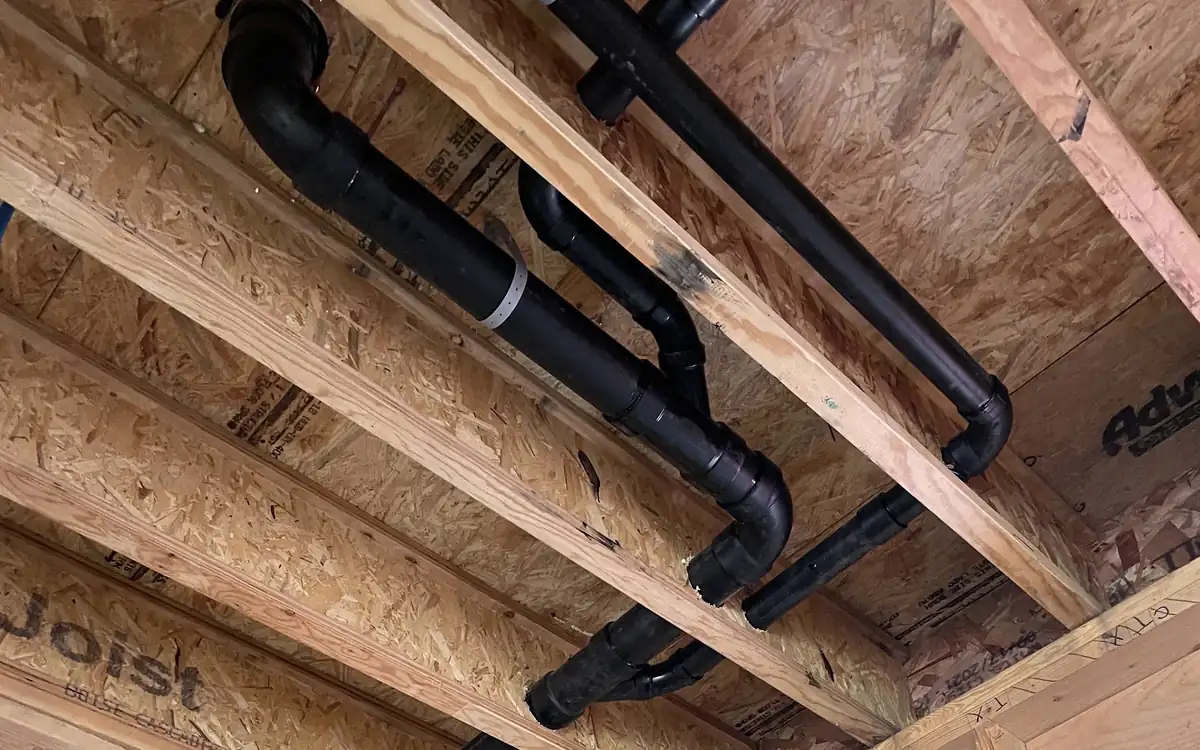
Black ABS drain and vent runs in floor joists, rough plumbing by the All Valley Plumbing crew
Open trench or trenchless, and what each one means for your yard
Trenchless replacement leaves driveways and sidewalks undisturbed, protects landscaping, and usually finishes faster. A pipe bursting job pulls new pipe into the old path, so most of the yard stays as you left it. Where it is possible, we recommend it.
Open trench excavation is sometimes the only way. If the pipe is severely damaged, or the line has to change route, we dig. It means more disruption and more labor hours, and the price reflects that. You get that number in your free local estimate before any work begins, and it does not change after the fact.
Financing through Housecall Pro and Wisetack is available if you would rather spread the cost of a replacement out over time.
Chapter 03
Permits, depth and slope under Yakima rules
Anyone installing or replacing sewer lines inside the City of Yakima needs a City of Yakima Side Sewer Installer License, and All Valley Plumbing holds it. If the job touches a sidewalk, an alley or other public property, a Street Break Excavation Permit is required too. Our team obtains it so you do not have to chase paperwork.
The pipe slope must be at least 2 percent, so the trench gets deeper as it approaches the municipal main, and we plan the dig backwards from the depth of the public sewer. We also leave enough soil cover over the pipe to protect it from foot traffic, vehicles and landscaping work.
Some lots do not have the room for the proper excavation depth. In those cases we need engineering approval before we go ahead. Call before you plan the budget and we will tell you where your lot stands.
All Valley Plumbing holds Washington plumbing contractor licence ALLVAVP772L2, journey level. Call (509) 268-4012 to book a camera inspection and a free local estimate.
What the Yakima River Basin water table does to a dig
Near the river basin the groundwater sits close to the surface, sometimes just a few feet down. That changes how an open trench goes, and it is a big reason people ask for trenchless replacement first.
Seepage
Groundwater close to the surface seeps into an open trench and makes the whole excavation harder.
Dewatering
The crew may need to pump water out of the trench before the pipe work can start, which adds delay.
Trench collapse
Saturated, silty soil caves in more easily, which makes an open trench less safe and is one reason trenchless is so popular here.
Pipe bedding
Soft ground usually means crushed stone or gravel laid down first, so the new pipe has a stable base and real support.
No trenchless option
If the old pipe is too badly damaged for trenchless work, the open trench in that wet soil is the harder road. We tell you before we start.
Not sure replacement is where you are headed? Start with Sewer Line Repair or the overview of our sewer lines work.